Engineering Feedback
Put a panel of AI engineers on your track.
This is AI mix feedback. A mix engineer, a mastering engineer, and an arrangement producer each read your track's measurements against tracks you already respect. On tracks with vocals, a vocal producer joins them. Where they agree, you know what to fix first. They tell you exactly how, in plain language.
Pick your own reference track, or let Slapback match one from its catalog of released electronic music.
Here is a real one, start to finish. Play it while you read.
Engineering Feedback for
turquoise by atish, enamour
Summary

This track was compared against
Matching on several factors including BPM, danceability, vocals, and more. A 95% match.
Upload your track and pick the reference you are chasing.
Your track is remarkably close to the reference in commercial loudness and low-end translation, but sits lean through the midrange body. Bringing up your melodic instrument levels to fill the scooped 250 Hz to 2 kHz region is the single most critical adjustment to match the reference's tonal weight. Your track already matches the reference in sub-bass mono precision and punchy dynamic delivery, giving you a rock-solid foundation.
What's working
What we found: Frequencies below 200 Hz are exceptionally well-centered with virtually zero stereo phase issues. This guarantees that your sub and low-end punch will translate cleanly and powerfully on club sound systems, mobile speakers, and mono setups.
Issues
This is not one opinion.
One friend's ears can be wrong, or too nice. A panel that agrees is another thing entirely.
Every angle, covered
A mix engineer, a mastering engineer, and an arrangement producer each read the measurements from their own angle, joined by a vocal producer on tracks with vocals. Nothing slips through because one of them happened to miss it.
You see where they agree
When more than one specialist flags the same thing on their own, the report marks it. That is not a matter of taste anymore. That is what to fix first.
Specific enough to act on tonight
Every note names the frequency, the level, and the moment, then tells you the move. No vague "needs more energy." You will know what to open and what to turn.
Measured against the pros
Your track is lined up next to a professional reference, band by band, so the feedback is grounded in how finished music sounds. Not a mood. A measurement.
You keep the lesson
Every finding explains why it matters, so it travels to the next track. Catch it here once, and you hear it yourself from then on.
The receipts.
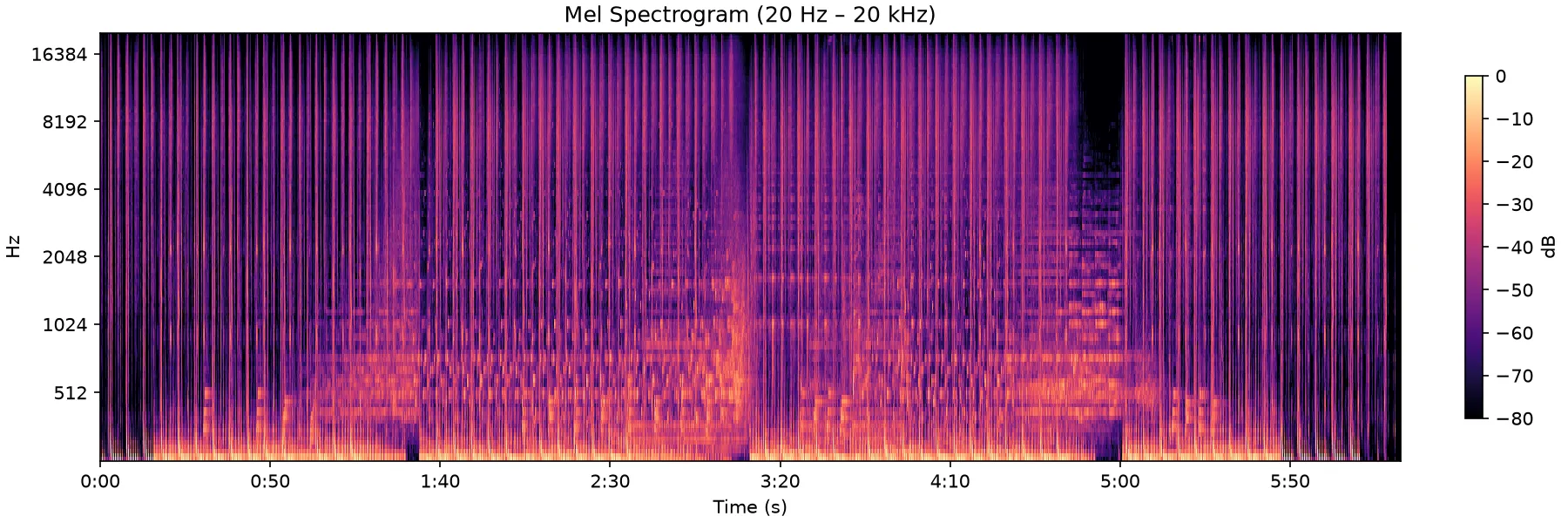
Every line in that report traces back to a number. Here are the same measurements the panel read, from loudness to low-end masking.
Loudness
Spectral Balance
Stereo Width
Stem Levels
Low-End Masking
Low-End Spectrogram
Low-End Detail (5-250 Hz)
Energy Timeline
Arrangement
Spectrogram